Rare Pakistani Folklore That Still Haunts the Land

- Published on
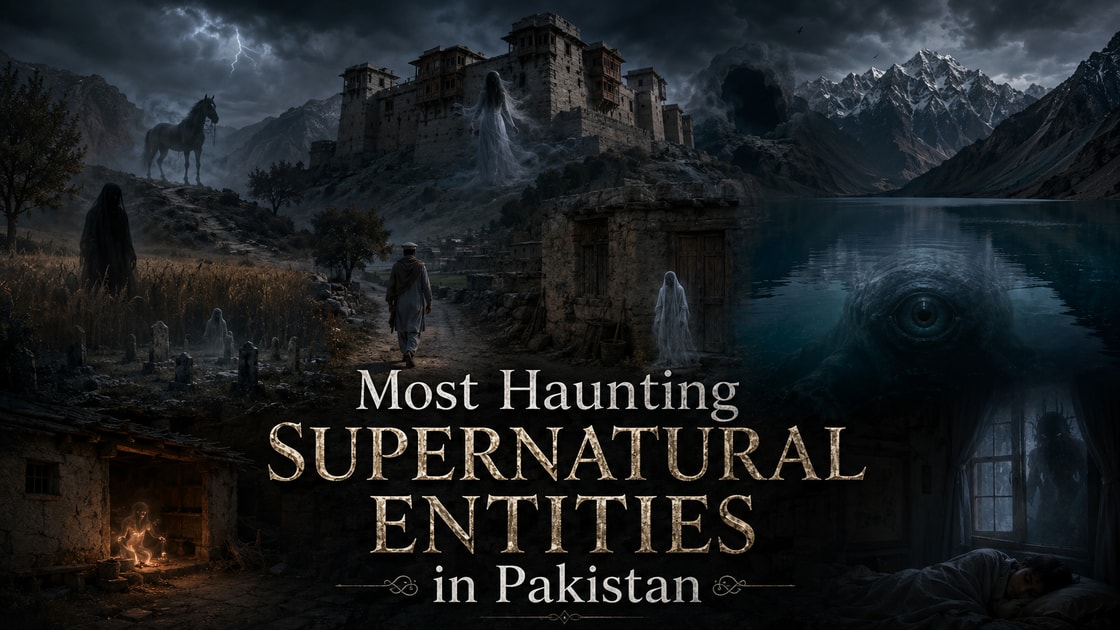
Most Haunting Supernatural Entities in Pakistan
Introduction
Pakistan’s supernatural folklore is far older and stranger than the few names people usually repeat. Most readers already know about jinn, churail, daayan, pari, and pichal peri. Those figures are important, but they are also familiar. The real depth of Pakistani folklore sits in smaller names, the ones carried by villages, valley people, elders, old houses, graveyards, mountain roads, sleeping rooms, and places where oral memory has not fully entered books.
These legends are not all equally documented. Some are strongly rooted in recorded folklore. Some survive in fragments, through a name, a dialect clue, or a remembered warning. That is part of their value. Folklore does not always survive as a neat story. Sometimes it survives as a place people avoid, a sound people recognise, a thing elders refuse to describe fully, or a name children are told not to say after dark.
This blog treats these beings as folklore, story, belief, and cultural memory. It does not claim that the stories are fact. It does try to preserve the mood, place, and meaning behind each legend.
Tora Aday: The Dark One Beyond the Village
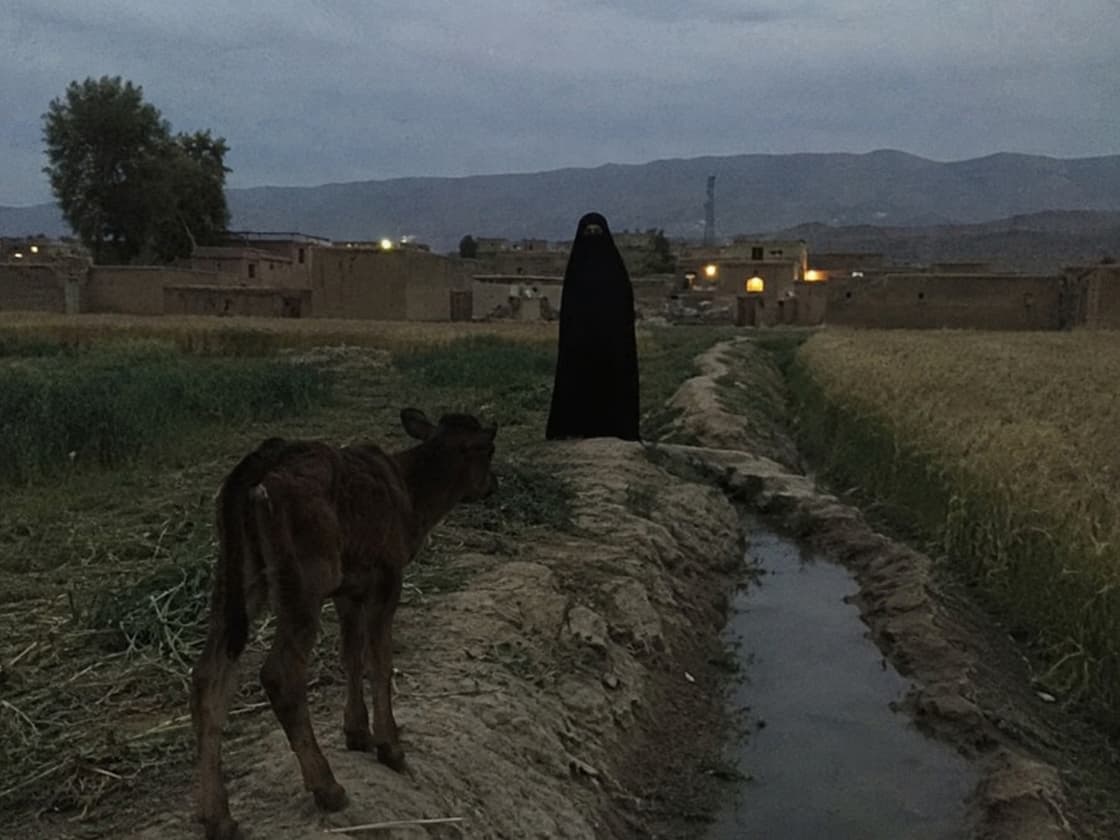
Introduce the legend
Name:
Tora Aday
What the legend is about?
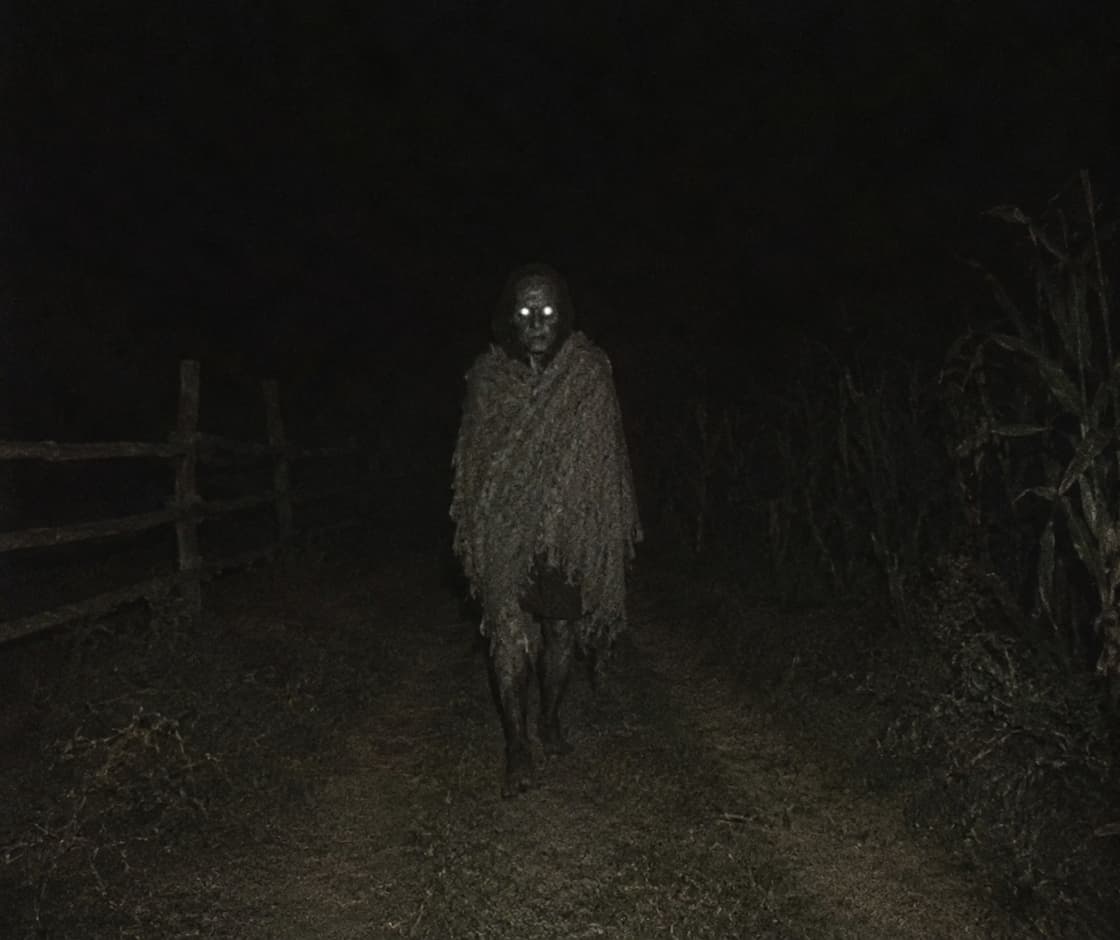
Tora Aday is one of the most obscure names in Pashtun supernatural memory. It is not a creature with a popular printed story, and that is exactly what makes it feel older. It seems to belong to the kind of folklore that survives through warnings rather than written tales. A name is spoken. A place is avoided. Children are told to come home before dusk. No one sits down and explains the creature in full, because the fear does not require a full explanation.
The name carries the feeling of darkness, outer ground, and village edges. In older Pashtun village life, the area beyond the houses was not just empty land. It was the place where fields began, where cattle strayed, where irrigation channels ran through darkness, where boys were sent to fetch tools, and where a person could still see the village but no longer feel completely protected by it. That border between the known and the unknown is where Tora Aday belongs.
Tora Aday is best understood as a presence of the outer fields. It is not a queen of the mountains, not a glamorous fairy, not a witch from a graveyard, and not a demon that announces itself with fire or noise. It is quieter than that. It stands in the dark part of familiar land and makes that land unfamiliar. That is the real fear of the legend. The place is not strange. You know the field. You know the path. You know the water channel. But at night something is there that should not be there.
The legend also reflects a very local kind of fear: the fear of leaving the social circle of the village. A village is not only houses. It is voices, lamps, animals, prayer, cooking smoke, elders, family, and the feeling that someone will hear if you call. Once a person steps outside that circle, they enter land that is still useful by day but uncertain after sunset. Tora Aday belongs to that uncertainty.
Because the story is fragmentary, it should not be over defined. It is better to present Tora Aday as an old Pashtun field edge entity, a dark figure connected with the boundary between settlement and open land. The missing details should remain part of the mystery. A half remembered legend can be more frightening than a complete one.
What is their story?
The story of Tora Aday is less about a single incident and more about a pattern. A child sent too late into the fields sees someone standing beside the ridges. A farmer returning after dark feels watched from the edge of the water channel. A calf refuses to move from a particular corner of the field. A man hears cloth moving where there is no wind. Someone looks back and sees a dark figure that has shifted position without walking.
Tora Aday does not need to attack in every telling. Its power is presence. It waits where the village ends. It makes people aware that the land around them does not fully belong to them after dark. In that sense, Tora Aday is a guardian of the unsafe hour. It marks the moment when ordinary work should stop and people should return home.
A strong way to read the legend is as a warning about limits. Do not wander after dusk. Do not ignore animals when they refuse a path. Do not assume the land you own by day remains yours at night. Do not speak too boldly when standing outside the last house. The supernatural figure gives shape to these rules.
A local story about Tora Aday
In an old village near the Mardan side, there was a field known for holding the evening cold longer than the others. By day it looked no different from the rest: wheat ridges, a narrow water channel, a line of mud walls, and a few scattered trees where boys tied cattle in the shade.
At night, people avoided it.
One winter evening, a boy was sent to bring back a calf that had slipped its rope. The animal had wandered towards the outer edge of the fields. The boy was annoyed because he had been called away from the warmth of the house. Smoke was rising from kitchens, and the last light had almost gone from the sky.
He found the calf near the water channel. It was standing still, head low, rope trailing in the mud. The boy pulled the rope, but the calf would not move.
Then he saw someone across the field.
A figure stood beside a low ridge, wrapped in black cloth. The boy thought it was a woman from the village. He called out and asked if she had seen the calf pass earlier. The figure did not answer.
He looked down to untangle the rope from a clump of grass. When he looked up again, the figure was standing farther away, beside another ridge.
The boy froze. He had not heard footsteps. There was no sound of cloth. No movement. Only the same figure, now standing where it could not have reached so quickly.
The calf suddenly pulled hard towards home. The boy let it drag him through the mud. He did not look back until he reached the first house.
His grandfather listened to him quietly. When the boy tried to describe the figure’s face, the old man raised his hand and stopped him.
“Do not give a face to what waits outside,” he said. “A thing without a face cannot follow you into the house.”
After that night, the boy was never sent to the outer fields after sunset. When he grew older, he warned his own children the same way: come home before the land turns black.
Where they are found
Tora Aday belongs to the older Pashto speaking village belt of Khyber Pakhtunkhwa, especially around the field margins of Mardan and the Sudhum side.
Ghuli Bayaban: The Graveyard Shape Changer
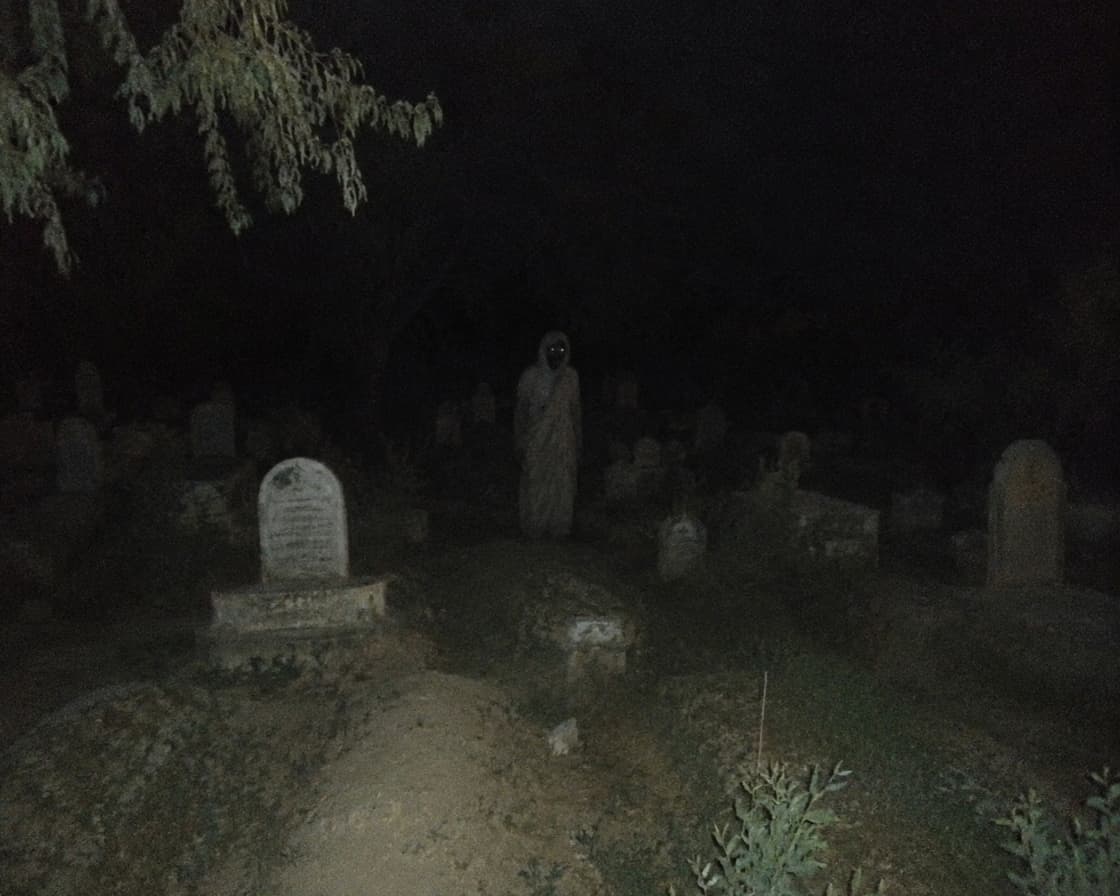
Introduce the legend
Name:
Ghuli Bayaban
What the legend is about?
Ghuli Bayaban is a rare Pashtun folklore figure linked with graveyards, wasteland, and shapeshifting. The name itself suggests a ghoul of the wilderness, a being that belongs to the barren edge of settlement rather than the centre of village life. It is the sort of creature people imagine in the places they cross quickly and do not linger in: old cemeteries, thorn scrub, abandoned tracks, dry ground beyond the fields, and burial places where stones lean in the dust.
This legend is about unstable form. Ghuli Bayaban is frightening because it may not appear the same way twice. It may be seen as a dog near a grave, a child sitting with its back turned, an old woman bent over the soil, a shadow between stones, or a figure that seems human until it moves incorrectly. Shapeshifting in folklore often reflects distrust. The creature cannot be safely recognised, and therefore it cannot be safely dealt with.
The graveyard connection is important. Graveyards in rural folklore are threshold places. They belong to the community, but they are not like homes or markets. They hold the dead, memory, fear, prayer, and silence. During the day, people may pass them without concern. At night, the same place becomes charged with possibility. Ghuli Bayaban is the being that makes that change believable.
The word Bayaban gives the legend an even wider feeling of emptiness. It suggests wilderness, desolation, and land beyond comfort. Ghuli Bayaban is therefore not only a graveyard being. It is a creature of the unguarded edge: the cemetery where the village stops, the scrub where paths divide, the dark patch of land no one claims after nightfall.
The legend also carries a moral pattern common in rural supernatural stories. Do not take shortcuts through burial grounds after dark. Do not follow a child or animal near graves. Do not assume every human shape is human. Do not mock old warnings simply because the path looks ordinary in daylight.
What is their story?
Ghuli Bayaban’s story usually works through confusion. The victim is not attacked immediately. First, they are made uncertain. They see something familiar, then something wrong. A dog that vanishes. A child that does not turn around. A woman whose hands are too long. A person heard crying near a grave but found laughing in another place.
The shapeshifting matters because the creature uses recognition as bait. A traveller who sees a dog may not be afraid. A person who hears a child may feel concern. Someone who sees an old woman near a grave may think she needs help. Ghuli Bayaban hides inside these instincts.
By the time the person understands that each form belongs to the same being, they are already inside its territory.
A local story about Ghuli Bayaban
Outside a village in the Sudhum area, there was an old graveyard bordered by thorn bushes. The stones were uneven, some marked, some almost swallowed by dust. By day, boys passed near it with goats. Women crossed the outer path when going to visit relatives. Men sat by the wall in winter sun and spoke of crops, prices, and marriages.
At night, no one used the shortcut.
One man laughed at this. He had walked the path since childhood and said a graveyard could not frighten a person who knew where every stone stood. One evening, after visiting a relative in the next settlement, he decided to return by that path.
The moon was thin. The graves were low shapes in the dark.
Near the first row, he saw a black dog sitting beside a stone. It watched him without blinking. He clicked his tongue to scare it away. The dog did not move.
A few steps later, he looked again and the dog was gone.
In its place sat a small child with his back turned.
The man stopped. “Whose child are you?” he asked.
The child began to laugh.
It was not a child’s laugh. It was dry and old, like someone coughing inside a closed room.
The man turned to leave. At the entrance to the graveyard stood an old woman, bent low, one hand resting on a grave. Her face was hidden, but when she lifted her head, he saw the same eyes the dog had carried.
He ran without knowing which direction he had taken. At dawn, villagers found him sitting near the mosque steps. His clothes were muddy. His shoes were filled with grave dust. He remembered the dog, the child, and the woman, but not the road home.
After that, no one in the village called the shortcut a shortcut. They called it Ghuli Bayaban’s path.
Where they are found
Ghuli Bayaban is best rooted in the Sudhum area of Mardan district, especially around old village graveyards, thorn scrub, dry paths, and the rough land beyond cultivated fields.
Ewa Khpaye: The One With the Wrong Foot
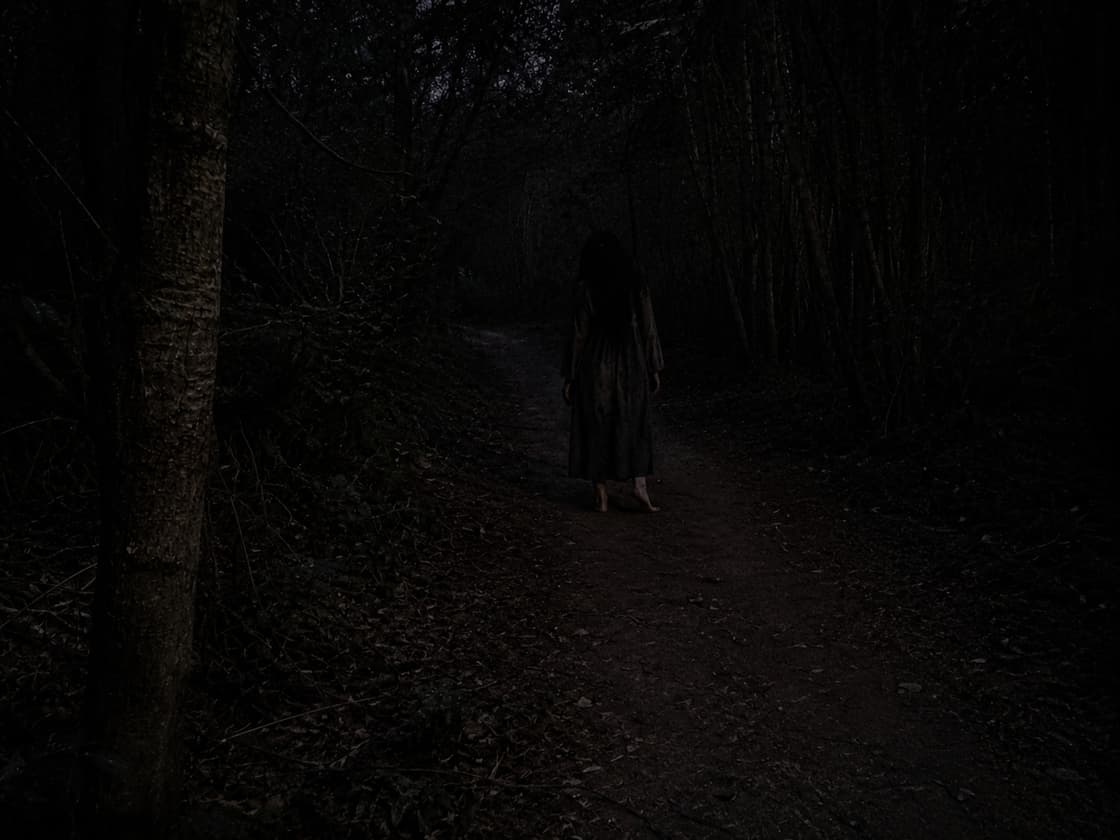
Introduce the legend
Name:
Ewa Khpaye
What the legend is about?
Ewa Khpaye is a rare Pashto folklore name that seems to carry the idea of a strange foot, wrong leg, or unnatural way of walking. The full legend is not strongly preserved in public material, but the name itself points towards a creature recognised through movement. That makes it a path based entity, something that belongs to lonely tracks, uneven ground, hill paths, and the soundscape of night travel.
In many South Asian traditions, feet reveal the supernatural. A woman may look beautiful until her feet are seen facing the wrong way. A traveller may look ordinary until his footprints make no sense. A spirit may imitate the living, but it cannot imitate the body perfectly. Ewa Khpaye belongs to that family of fear, but with a Pashtun flavour: less about visual glamour, more about the sound of steps behind a person in the dark.
The legend is about a body that does not move correctly. One foot may drag. One leg may strike the earth too heavily. The steps may sound uneven, as if the creature is injured, but the injury does not slow it down. That is the frightening part. A human with a bad leg falls behind. Ewa Khpaye keeps pace.
The story also speaks to the fear of being followed. On a narrow rural path, especially before electric lighting, a person could identify danger by sound. Hooves, sandals, bare feet, stones shifting, cloth brushing against branches. If the rhythm behind you is wrong, your body understands before your mind does.
Ewa Khpaye should therefore be treated as a legend of sound, rhythm, and pursuit. It may never fully show its face. It may not need to. A single wrong step, repeated behind you, is enough.
What is their story?
Ewa Khpaye’s story likely survived because of the fear of night walking between villages. A person returning from grazing animals, visiting relatives, fetching water, or crossing a ridge after sunset hears footsteps. They stop. The steps stop. They walk again. The steps return.
The creature’s wrong foot becomes its signature. It does not whisper. It does not call your name. It does not appear in front of you at first. It simply follows with a rhythm that cannot belong to an ordinary person.
There is often a rule hidden inside such legends: do not turn too soon. Do not answer sounds behind you. Do not mock deformity or strange movement. Do not assume that every follower is human. Get to the first house, the first lamp, the first voice. Safety lies in reaching community before the thing reaches you.
A local story about Ewa Khpaye
A shepherd in the hills above a Pashto speaking village lost one of his goats near evening. He knew he should have left it, but the goat belonged to his younger brother, and he did not want to return without it.
He searched among the rocks until the valley below turned blue with dusk. By the time he found the goat, the first lights had appeared in the village far below.
He tied the rope around his wrist and began walking down the path.
At the first bend, he heard a step behind him.
One foot landed on stone.
The other dragged.
He stopped. The goat stopped. The path behind him was empty.
He walked again.
Step. Drag. Step. Drag.
The sound followed him from the bend to the narrow part of the track where thorn branches leaned close. The shepherd told himself it was an echo. But echoes do not stop when a man stops breathing.
He began to recite quietly. The goat pulled forward so hard that the rope burned his wrist.
At the final slope above the village, the shepherd turned.
A figure stood on the path. Its body leaned to one side. One leg was too long or too weak, he could not tell which. Its head was lowered as if listening to the ground. Then it took one step.
The sound struck the stones exactly as he had heard it.
The shepherd ran. The goat ran with him. He reached the first courtyard and collapsed against the wooden door.
When the family opened it, he could only say, “It followed with the wrong foot.”
For years afterwards, when young men joked about walking home late, elders would tap the ground once, drag their foot once, and the laughter would stop.
Where they are found
Ewa Khpaye is found in the older Pashto oral belt of Khyber Pakhtunkhwa, especially along rural tracks in the Mardan, Swabi, and southern Pashtun zone.
Sapakha or Khapasa: The Thing That Sits on the Chest
Introduce the legend
Name:
Sapakha or Khapasa
What the legend is about?
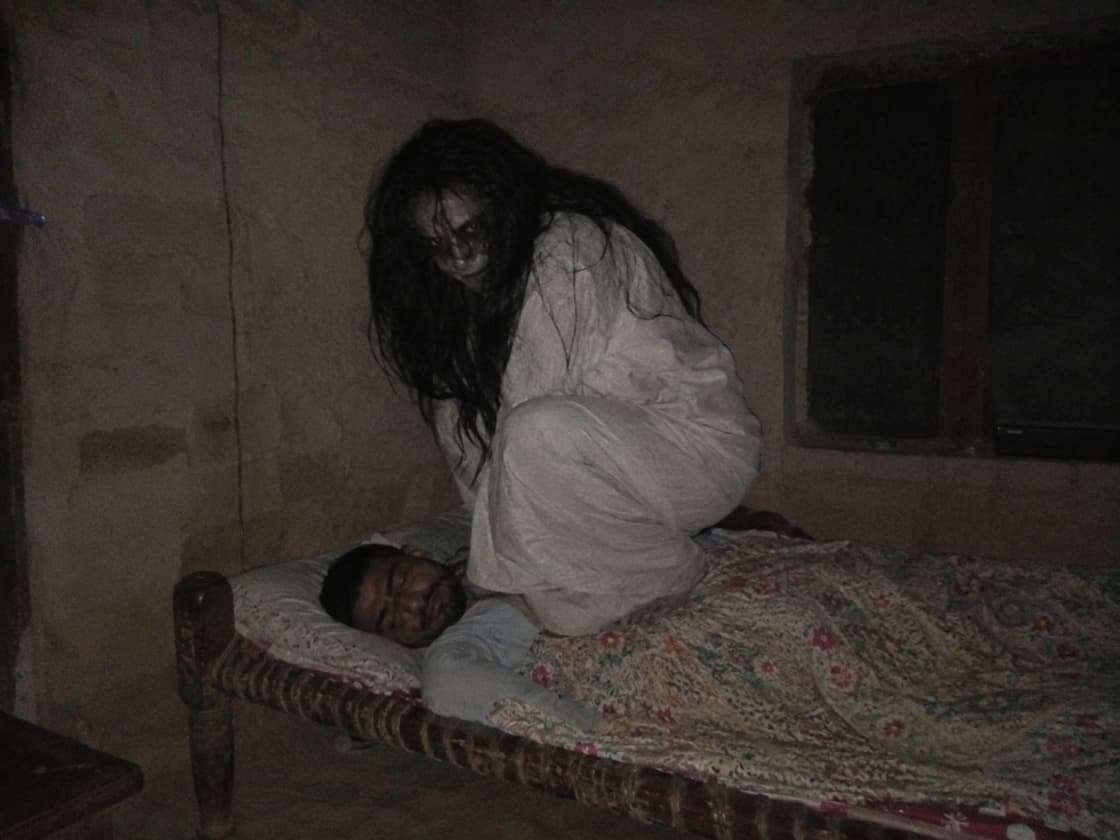
Khapasa, also remembered in some forms as Sapakha, is one of the most powerful and personal entities in Pashto supernatural belief. It is linked with sleep paralysis, the terrifying experience in which a person wakes up but cannot move, cannot speak, and feels a crushing pressure on the chest.
Modern language may call this sleep paralysis. Folklore calls it a visitor.
That difference matters. Sleep paralysis is not only frightening because the body is frozen. It is frightening because the mind is awake enough to interpret the room. A shadow in the corner seems alive. A blanket feels like weight. Silence feels intentional. The person cannot shout for help, and even breathing may feel difficult. Khapasa gives this experience a body and a motive.
The legend is about helplessness in the safest place a person knows. Many supernatural beings live outside: graveyards, fields, roads, caves, rivers. Khapasa comes inside. It enters the room. It reaches the bed. It sits on the chest. That makes it more intimate than a distant monster. It attacks at the exact moment a person is least able to defend themselves.
Descriptions vary by household and dialect. Some people imagine Khapasa as a demonic figure. Some say it is noseless. Some do not describe its face at all. In many cases, the experience matters more than the appearance. The weight, the frozen limbs, the trapped breath, and the sense of a presence are the real legend.
The belief also carries protective habits. Prayer, recitation, sleeping position, iron, and the old idea of keeping a knife near the pillow all appear in different forms. These details show that people did not treat the experience as random. They built small rituals around it, ways to feel less helpless against the night.
What is their story?
Khapasa’s story is repeated in bedrooms, not public squares. Someone wakes before dawn and cannot move. They feel a shape on the chest. They try to call their mother, wife, brother, or grandmother, but the voice does not come. They hear the room clearly: a fan, a rooster, a door creaking, someone breathing nearby. Yet they remain locked inside their own body.
When they finally move, the entity is gone. The room is normal again. That sudden return to normal life is part of the horror. Nothing is broken. No footprint remains. No one else saw anything. But the person who experienced it knows the fear was real.
In folklore, Khapasa teaches that the night has a private life. It also shows how families interpret fear together. A grandmother may ask how the person slept, whether they recited before bed, whether iron was nearby, whether they had been careless. The story becomes part of domestic knowledge.
A local story about Khapasa
In a village in Swabi, a young woman woke before dawn and knew at once that she was not fully awake.
The room was dark, but she could hear everything. Water dripped in the courtyard. Someone coughed in the next house. A rooster called once and then stopped. Her younger sister slept beside her, one arm outside the quilt.
The young woman tried to turn her head.
She could not.
She tried to lift her hand.
Nothing moved.
Then the pressure came.
It settled on her chest slowly, like someone lowering themselves onto her body. Her breath shortened. Her mouth opened, but no sound came out. In the corner near the wooden trunk, the darkness seemed thicker than the rest of the room.
She tried to recite a verse, but the words broke inside her head.
The pressure grew heavier. She felt as if a face had come close to hers, though she could not see it clearly. There was no smell, no voice, only weight and attention.
Then, all at once, her body returned. She gasped so loudly that her sister woke and began crying.
In the morning, her grandmother listened without surprise. She asked whether the girl had slept flat on her back. Then she asked whether she had kept the small knife under the pillow as she had been told.
The girl laughed because daylight makes many fears look foolish.
That night, before sleeping, she checked under the pillow twice.
Where they are found
Khapasa belongs to Pashto speaking households, especially in Swabi, Lakki Marwat, and the wider southern Pashtun belt where related names and beliefs are remembered.
Feru Tis: The Hearth Fairy of Chitral
Introduce the legend
Name:
Feru Tis
What the legend is about?
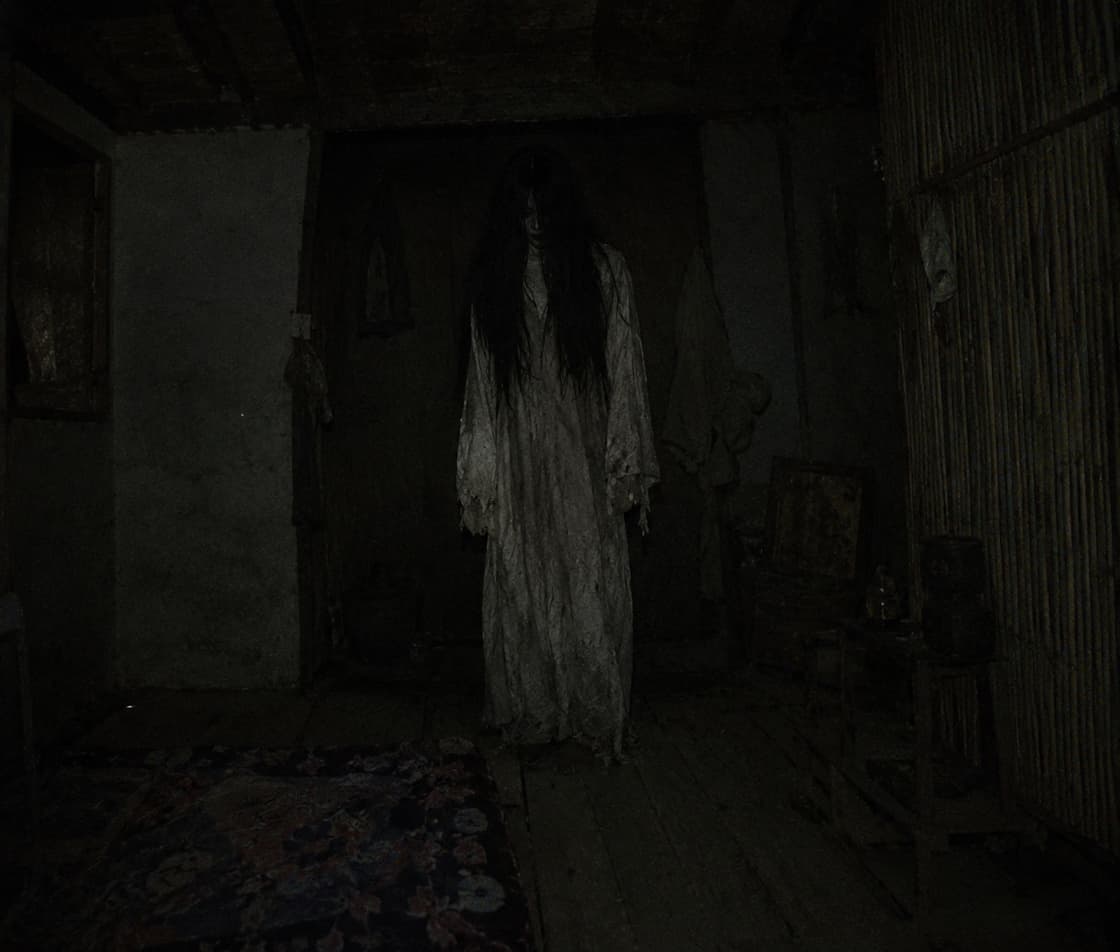
Feru Tis is a tiny hearth fairy from Chitrali folklore. In older records, the name also appears as Pheruthis. She belongs to the fireplace, ash, embers, and the central room of the traditional Chitrali home.
This legend is about the living power of the hearth. In old Chitral, the hearth was not just a cooking place. It was the centre of winter life. Families gathered around it for warmth, food, talk, work, and survival. A spirit attached to that space would not need to be large. The hearth was already powerful. Feru Tis gains importance because she lives where the household depends most on order.
She is said to be very small, which makes the legend more interesting. Pakistani supernatural figures are often imagined as large, beautiful, terrifying, or monstrous. Feru Tis is different. She is domestic, hidden, and easily offended. Her signs are small: a fire that refuses to burn properly, smoke that fills the room, a spoon or small object that vanishes, a sense that the hearth has become moody.
The legend reflects the emotional life of a house. A household can be peaceful or tense. A fire can burn cleanly or smoke badly. Children can quarrel. Food can be shared or withheld. Feru Tis gives these small domestic disturbances a supernatural cause. If the house is careless, noisy, greedy, or disrespectful near the fire, the hearth fairy may show displeasure.
Unlike a demon, Feru Tis does not need to destroy the family. She disrupts them. She reminds them that the centre of the home deserves respect.
What is their story?
Feru Tis lives near the hearth and is sensitive to behaviour around it. If people treat the fire with respect, she remains almost invisible. If they quarrel, waste food, neglect offerings, or behave badly in the hearth space, she interferes.
Her story often works through missing things. A copper spoon disappears. A bead, needle, small cup, or cooking tool cannot be found. The fire smokes although the wood is dry. The family becomes irritated, blaming each other, until an elder recognises the pattern and makes peace with the hearth.
This kind of legend is deeply practical. In a winter mountain house, fire is not decoration. It is heat, food, and life. A spirit that controls fire becomes a moral figure. She teaches children to behave near the hearth, reminds families not to waste food, and gives elders a way to explain misfortune without turning family members against each other.
A local story about Feru Tis
In an old baipash room in Chitral, the winter fire began to behave badly.
The mother of the house had stacked dry wood near the hearth. The embers were alive. The room should have warmed quickly. Instead, the flames rose for a moment, bent sideways, and sank into smoke.
The children coughed. The youngest began to cry. The father blamed the wood. The mother blamed the boy who had brought it. The boy swore the wood was dry.
By evening, the copper spoon was missing.
Everyone searched. They looked near the flour jar, under the bedding, beside the water pot, behind the wooden chest. The spoon was gone.
The grandmother had been silent all day. At last, she told the children to stop shouting near the fire. She took a small piece of bread, dipped it in tea, and placed it carefully near the warm stone at the edge of the hearth.
Then she whispered, “We have not forgotten you.”
No one asked who she meant.
That night, the fire burned clean. The smoke rose properly. The room warmed so well that the youngest child slept without waking.
In the morning, the copper spoon was found beside the flour jar, in the first place everyone had searched.
The grandmother only smiled and said, “The hearth gives back what it takes, when the house remembers its manners.”
Where they are found
Feru Tis belongs to traditional Chitrali homes, especially the baipash room and the didang hearth in older houses around Chitral village and nearby valley settlements.
Khangi: The Domestic Guardian of Forts and Big Houses
Introduce the legend
Name:
Khangi
What the legend is about?
Khangi is a domestic guardian spirit from Chitrali folklore, associated with large houses, forts, and old family compounds. The name is often understood as meaning the domestic one. That meaning is important because Khangi is not a wandering monster. It belongs to a household.
Unlike many frightening beings, Khangi is not purely evil. It can protect the people of the house from more harmful spirits. But it expects recognition, food, and respect. This makes Khangi more complex than a ghost. It is closer to an unseen member of the household, one with its own pride, habits, and temper.
The legend is about the relationship between a house and the people who live inside it. Old houses are never just walls. They hold births, deaths, quarrels, marriages, stored grain, hidden objects, family honour, and the memory of those who came before. Khangi gives that memory a supernatural form.
Khangi is often heard rather than seen. People may hear rice being cleaned at night, apricot stones being cracked, utensils moving, or faint work sounds from a storeroom when everyone should be asleep. Such sounds are not treated as random. They may be signs that the house spirit is active.
The connection with snakes is also meaningful. In many household traditions, a snake inside a storeroom or grain area is not always killed immediately. It may be treated carefully, especially if people believe it could be linked with a guardian presence. Khangi may therefore appear not as a full human shape, but through signs: a snake, a sound, a missing utensil, a night knock, or a food offering disturbed after dark.
What is their story?
Khangi’s story is about exchange. The household receives protection, but the spirit receives respect. Food may be left after dinner. The house is not treated as empty after the family sleeps. Certain rooms are approached carefully. Children are told not to mock sounds at night.
When respected, Khangi protects the home. When ignored, it becomes troublesome. Utensils vanish. Knocking sounds continue through the night. Stored food is disturbed. People become uneasy in their own rooms. The spirit does not necessarily wish to destroy the family. It wants to remind them that they are not the only residents.
The legend also speaks to hierarchy. Khangi is tied to big houses and forts, places that carry lineage and status. A spirit in such a place is not only domestic but historical. It guards the family, but also the memory of the house itself.
A local story about Khangi
In a large old house near Chitral town, the family began hearing sounds after midnight.
At first, the sound was soft, like grain being moved in a wooden tray. Then came the crack of apricot stones. Then the faint clink of utensils from the storeroom.
The eldest son took a lamp and wanted to search the house. His grandmother told him to sit down.
“Do not chase what works for the house,” she said.
The next morning, the youngest daughter saw a pale snake slip behind the grain jars. One of the boys reached for a stick, but the grandmother struck his hand away.
She warmed a little milk and placed it near the storeroom wall.
For three nights, the house was quiet. No utensils moved. No knocking came from the inner rooms. The snake was not seen again.
Then a cousin arrived from another village. He laughed when he heard the story. At dinner, he ate heavily and mocked the idea of leaving food for something unseen.
That night, every spoon in the kitchen disappeared.
The family searched until noon. The spoons were found inside a locked chest that had not been opened for months.
The cousin did not laugh again. Before leaving, he placed a piece of bread near the storeroom wall and apologised under his breath.
Where they are found
Khangi belongs to old Chitrali forts, large houses, storerooms, and family compounds, especially around Chitral town and older residences linked with local elites.
Chumur Deki: The Iron Legged Horse
Introduce the legend
Name:
Chumur Deki
What the legend is about?
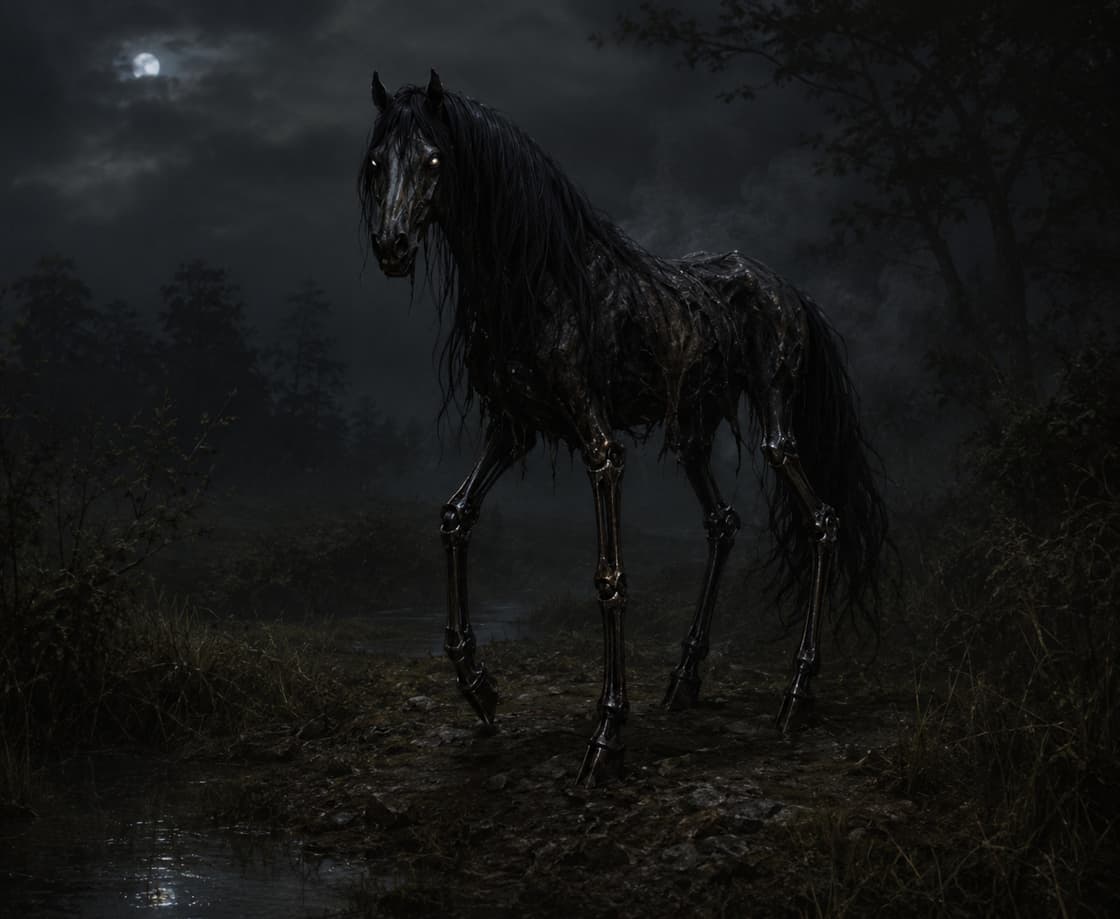
Chumur Deki is the iron legged horse of Chitrali folklore. It is remembered through sound more than sight. Its defining feature is the clanking of iron legs as it gallops near travellers in the dark.
This legend belongs to roads, passes, village edges, and mountain travel. It is a creature of movement. Unlike a house spirit such as Khangi or a hearth fairy such as Feru Tis, Chumur Deki lives in the exposed space between settlements. It appears when a person is already vulnerable: alone, late, tired, and far from the safety of a home.
The iron legs are the key to the fear. A normal horse has a natural rhythm. Chumur Deki sounds unnatural. The clank of metal on stone turns the road into a warning. The traveller may not see the creature clearly, but the sound follows, matches pace, and refuses to fade.
The legend reflects older conditions of travel in Chitral. Roads were difficult. Villages were separated by mountain terrain. Weather, darkness, rivers, and narrow paths could make travel dangerous. A person walking alone at night was already afraid. Chumur Deki gives that fear a body and a sound.
This is also a legend of companionship turned wrong. Being followed is frightening, but being accompanied by something unseen can be worse. Chumur Deki does not always attack. Sometimes it simply runs beside the traveller until the next village comes into view. That restraint makes the legend stronger. It suggests that the creature enjoys fear more than violence.
What is their story?
Chumur Deki’s story usually begins with a traveller leaving too late. A trader, messenger, herder, or villager is caught on the road after sunset. At first the night is ordinary: cold air, stone underfoot, animal breath, perhaps a river below.
Then the sound begins.
Clanking iron.
The traveller thinks another rider is approaching. He calls out. No one answers. The sound shifts position. It comes from behind, then beside him, then from a slope where no horse could run. The traveller hurries. The sound keeps pace. He slows. It slows too.
The creature’s purpose is to remind people that the road at night does not belong only to humans.
A local story about Chumur Deki
A trader was returning along an upper Chitral route after leaving later than he should have. He had sold cloth in one village and hoped to reach the next before full dark, but a broken strap on his pack delayed him.
By the time he reached the narrow road above the ravine, the valley had gone silent.
His pony knew the way, so he let it lead.
Then he heard the sound.
Clank. Clank. Clank.
He turned, expecting to see another rider. The road behind him was empty.
He called out. “Who is there?”
No answer.
The pony stopped and would not move.
The sound came again, but now it was beside him, beyond the edge of the road. That was impossible. On that side there was only a drop into darkness.
Clank. Clank. Clank.
The trader could hear hooves striking stone. Iron legs. A horse running where no horse could stand.
He kicked the pony forward. The animal stumbled, recovered, and began moving fast. The sound moved with them. When they sped up, it sped up. When the road narrowed and they slowed, it slowed.
The trader began reciting prayers, one after another, forgetting the order, repeating the same lines. The clanking came closer until it sounded almost level with his shoulder.
Then, at the bend before the next village, the first house light appeared.
The sound stopped.
The trader reached the village shaking so badly that he could not untie his own pack. When asked what had happened, he said, “It did not chase me. It ran with me.”
For years, people repeated his words as a warning: never let the road choose your companion after dark.
Where they are found
Chumur Deki belongs to old Chitrali village roads and upper valley travel routes, especially paths linked with movement towards historic passes such as Dorah.
Nang: The One Eyed Giant Under the Lake
Introduce the legend
Name:
Nang
What the legend is about?
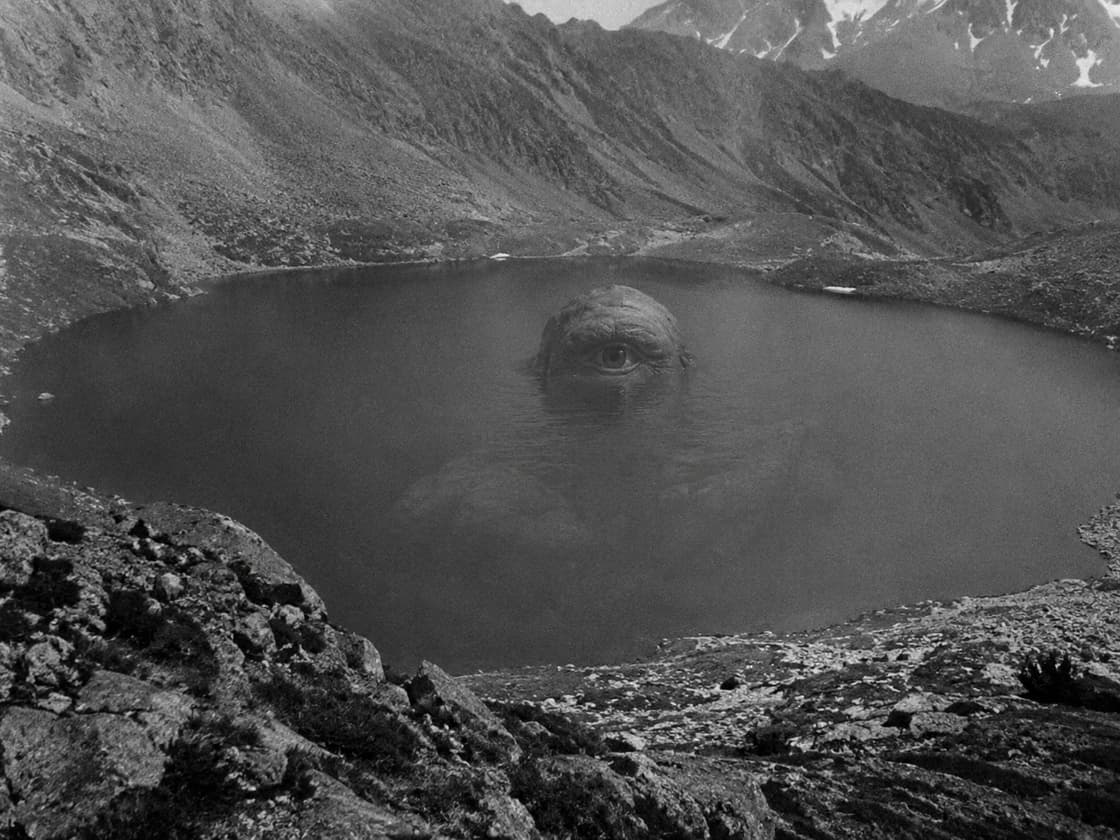
Nang is a one eyed giant from Chitrali lake folklore. It is said to live beneath natural lakes, where hidden palaces, gardens, wealth, and strange underwater spaces exist beyond human reach.
This is not a simple water monster. Nang belongs to a deeper belief that lakes are not empty bodies of water. In mountain folklore, lakes can be doors. They can hide kingdoms, spirits, treasure, vanished people, or beings that see the human world from below. The surface of the lake is only a skin. Under it, another world may exist.
The one eye of Nang is important. A single eye often suggests a being that sees differently from humans. It does not look with ordinary sight. It watches from the depth. It notices those who come too close. In a mountain lake, where the surface can be still and dark, the idea of a huge eye opening underneath feels natural to the imagination.
Nang is linked with stories of princes, princesses, wealth, abduction, and hidden palaces. This gives the legend a courtly quality. It is not just a beast dragging animals into water. It belongs to a mythic world of rulers, treasure, desire, and danger. The lake becomes both beautiful and threatening.
Chitral’s water monster lore also overlaps with dragon traditions and memories around Mastuj, including the idea of an old lake associated with a dragon. Nang sits within this wider world of deep water beings. The details may shift from one telling to another, but the core fear remains: do not trust still water just because it reflects the sky.
What is their story?
The story of Nang usually centres on someone looking too closely. A prince rides near a lake. A herdsman sees lights beneath the water. A traveller sees trees, walls, or a garden below the surface. The person becomes curious. That curiosity is dangerous.
Nang’s underwater world is not presented as muddy or ugly. It is often rich, even beautiful. That is part of the trap. The lake does not only frighten. It invites. A person wants to see more, and by wanting to see more, they are noticed.
In such stories, the lake is a boundary between human life and an older, stranger ownership. Humans may pass near it, water animals near it, or admire it, but they do not rule it. Nang does.
A local story about Nang
Near Mastuj, elders once spoke of a lake whose surface was too still.
A young prince was passing through the area with a small party. He had heard stories that lights moved below the water at night, as if lamps were burning inside a palace. His companions told him not to ride too close to the shore. The prince laughed and said no lake could frighten a man on a good horse.
He rode ahead.
At the edge of the water, he stopped. The lake was clear, but not in an ordinary way. It did not show only stones and depth. Beneath the surface, he saw what looked like branches.
Then the branches became trees.
Behind them were walls.
Behind the walls was a gate.
The prince leaned forward in the saddle. His horse stamped and pulled back, but he tightened the reins.
The gate below the water opened.
Inside the darkness, one enormous eye looked up.
The men behind him shouted. The horse reared. For a moment, the lake rose without wind, without wave, as if something below had lifted it from underneath.
When the water settled, the prince was gone.
His horse was found trembling among the stones. The lake returned to stillness so quickly that some men wondered whether they had imagined everything. But none of them drank from that shore again.
After that, people said the lake did not reflect the sky. It watched it.
Where they are found
Nang belongs to natural lakes in Chitral, with the strongest placement around Mastuj and the old lake memory associated with Nahangu Chhat, the Dragon’s Lake.
Barzangi: The Giant of Storms and Caves
Introduce the legend
Name:
Barzangi
What the legend is about?
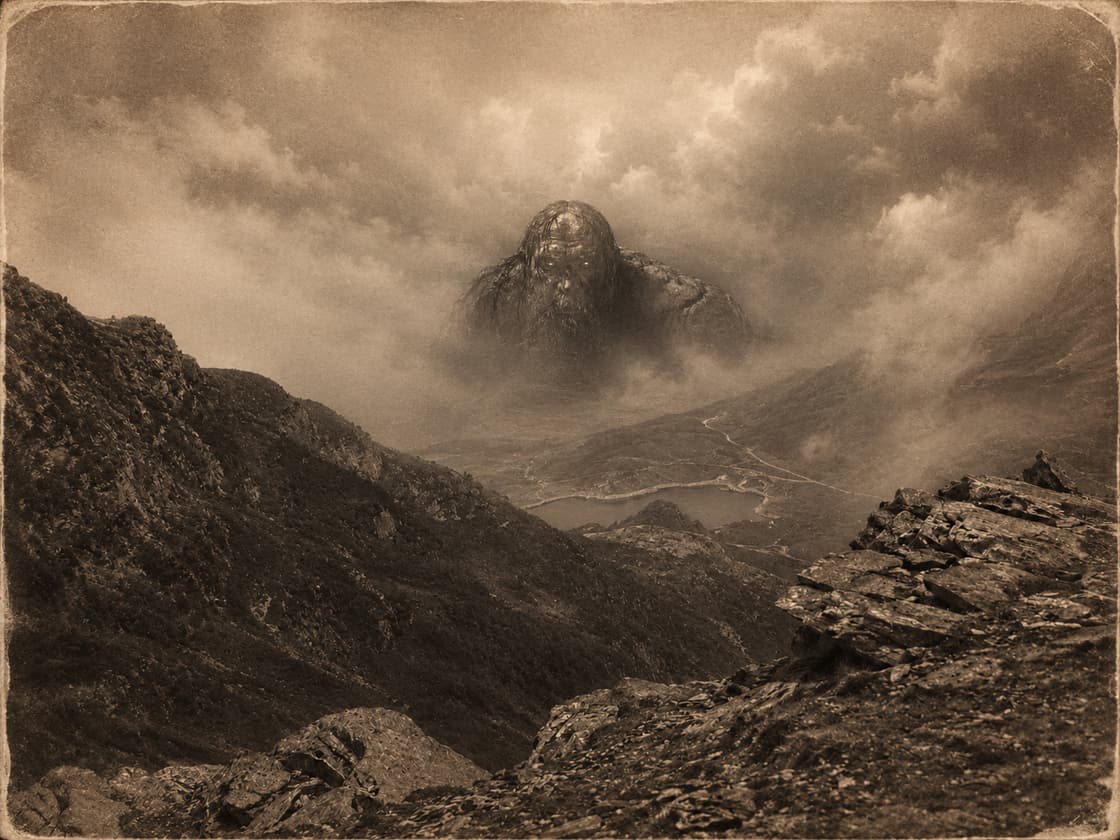
Barzangi is a dark giant from Chitrali mythic tradition. It is associated with caves, desolate uplands, heavy rain, hailstorms, and the devouring of humans. It is one of the harshest beings in this list because it does not belong to the social world at all. It is not domestic, not helpful, not seductive, and not playful. It is hunger, weather, and violence given shape.
The legend is about the fear of the mountain when the mountain turns against people. In high valleys, storms are not background scenery. Rain can flood paths. Hail can destroy crops. Snow and wind can trap travellers. A cave can be shelter, but it can also be a mouth. Barzangi lives in that fear.
Its connection with storms is especially important. Many supernatural beings are tied to places. Barzangi is tied to conditions. It becomes believable when the sky darkens, when hail begins, when thunder moves through rock, when animals refuse to go forward, and when a cave looks less like safety than a throat.
Some accounts make Barzangi extremely hard to kill. The idea that it may survive violence or return after being attacked suggests that it is not only a monster but a force. You may escape one storm, but storms return. You may avoid one cave, but the mountains remain full of dark openings.
This legend also reflects the vulnerability of shepherds, travellers, and people who work in exposed landscapes. Barzangi is not a creature of crowded places. It appears where humans are small: high slopes, grazing routes, cave mouths, and storm lines far from help.
What is their story?
Barzangi’s story begins when shelter becomes suspicious. A person caught in bad weather sees a cave and considers entering. That is the natural human response. The legend turns that response into danger. What if the cave is already occupied? What if the darkness inside is not empty? What if the sound inside is not water?
The creature’s hunger is central. It is a man eater, but in folklore that often means more than physical eating. It means the wild place consumes people. A traveller disappears in a storm. A shepherd never returns from a cave. Animals scatter and are found torn or missing. The community explains the loss through Barzangi.
The legend teaches caution around caves and sudden weather. It tells people not to trust every shelter. It reminds them that the mountain has places where humans are not welcome.
A local story about Barzangi
A shepherd in Upper Chitral was bringing his animals down from a high slope when the sky changed.
The morning had been clear, but by afternoon the clouds gathered low and dark. The first hailstones struck softly. Then they came harder, bouncing from rock, cutting leaves, and making the sheep push together in fear.
The shepherd looked for shelter and saw a cave mouth across the slope.
At first, he felt relief. The cave was wide enough for him and perhaps some of the animals. He began moving towards it, pulling his cloak over his head as hail struck his shoulders.
Then he heard a sound from inside.
Drip.
Drag.
Chew.
He stopped.
The sound came again, slower this time. It was wet and heavy, not like water falling from stone. The sheep behind him began to panic, pulling away from the cave.
A flash of lightning opened the valley for a second. In that moment, the shepherd saw marks in the mud near the cave mouth, long grooves as if something large had dragged itself out and back in.
He turned away from the cave and chose the storm.
By the time he reached the lower path, his face was bruised from hail and two sheep were missing. The next morning, men returned with him to look for them. Near the cave, they found wool caught on a rock and prints too large to belong to any animal they knew.
No one entered.
After that, the cave was avoided even in bad weather. People said that when hail falls hard enough to sound like teeth on stone, Barzangi is awake.
Where they are found
Barzangi belongs to the cave belts, exposed slopes, and storm struck uplands of Upper Chitral.
The Banshee of Shoghort: The Wailer of the Old Fort
Introduce the legend
Name:
The Banshee of Shoghort
What the legend is about?
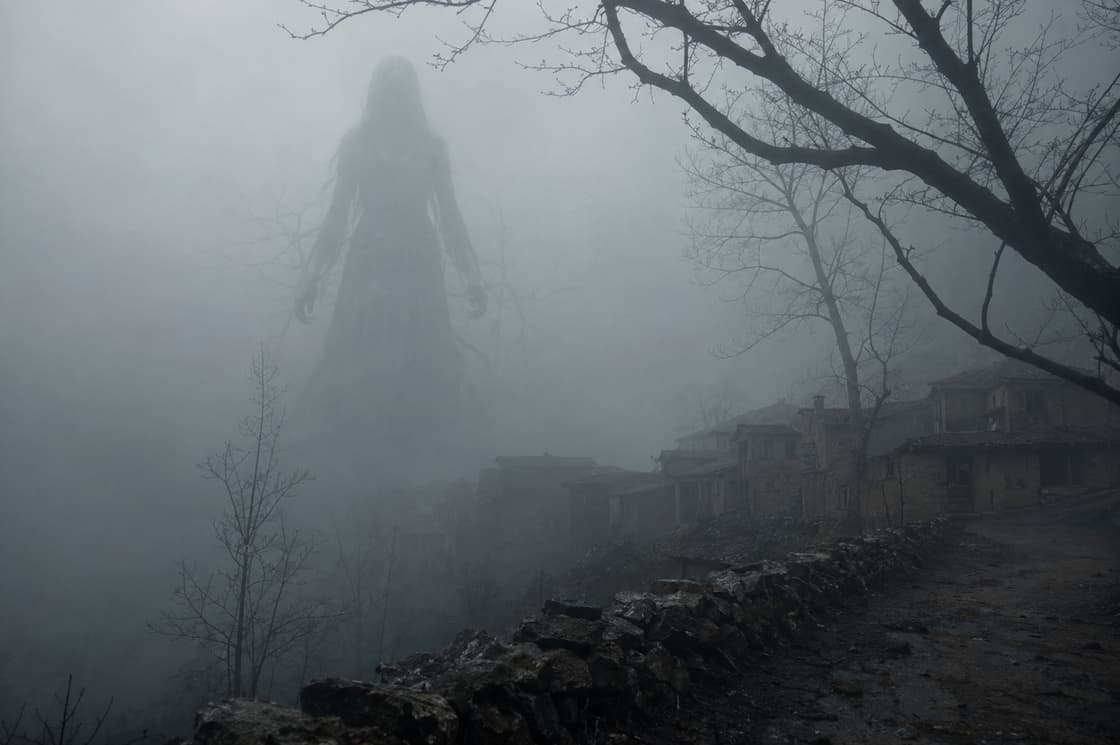
The Banshee of Shoghort is one of the most striking localised legends in this list. The word banshee is an English comparison, used because the figure resembles a death wailing female spirit. But the legend itself belongs to Chitral, specifically to Shoghor or Shoghore and its old fort and route world.
This being is said to wail before the death of a king or ruler. That makes her different from an ordinary ghost. She is not a random haunting. She is an omen of political death. Her cry is tied to power, bloodline, and the old ruling order of the valley.
The legend is about sound as prophecy. Before official news arrives, before riders reach the fort, before the court speaks, the valley hears the cry. The spirit knows first. The stones know first. The old place announces what humans have not yet been told.
The location matters deeply. Shoghort sits within a historically important Chitral landscape connected with old forts, routes, and pass corridors. A wailing spirit in such a place is not only a supernatural figure. She is part of political geography. The fort watches routes. The spirit watches fate.
Some tellings connect her with a fairy princess or a woman tied to an old ruler. Whether that is the oldest layer or a later explanation, it gives the legend a tragic quality. She is not just frightening. She mourns. Her cry is both warning and grief.
What is their story?
The Banshee of Shoghort appears through sound. She may not need to be seen at all. Her voice moves through stone, across courtyards, down valleys, and into the ears of guards or villagers before dawn. The timing matters. Such cries are often heard in liminal hours, before sunrise, when night has not fully ended and news has not yet become public.
Her story is tied to royal death. She does not cry for every person. That selectiveness gives the legend status. It belongs to the ruling house, old authority, and the belief that certain families are watched by forces beyond the human world.
The fear is not that she kills. The fear is that she knows. Her cry means something has already happened or is about to happen, and no human power can stop it.
A local story about the Banshee of Shoghort
At the old fort near Shoghort, the guards heard the cry before dawn.
The night had been cold and still. No wind moved through the stones. No animal called from the lower slopes. Then a sound rose from inside the fort, although every room had already been checked.
At first, the younger guards thought it was a woman weeping.
The older guard told them not to move.
The cry grew longer. It passed through the courtyard and seemed to enter the walls themselves. It was not loud in the ordinary way, but it carried. Men in the outer rooms woke and sat upright. A horse tied near the gate began pulling at its rope.
The sound moved down the valley before fading.
No woman was found.
At sunrise, the younger guards wanted to speak of it, but the older guard told them to wait. He had heard such a cry once before, when he was a boy. News had followed then. News would follow now.
By midday, riders arrived. Their horses were tired, and their faces carried the message before their mouths did.
A ruler had died.
Nobody in the fort asked what had cried in the night. The answer was older than any man present.
The Wailer of Shoghort had spoken before the court could.
Where they are found
This legend belongs specifically to Shoghor or Shoghore in Chitral, near the older route world connected with Partsan, Garam Chashma Road, and the pass corridors of Khatinza, Nuqsan, and Dura.
Do not move this spirit to every fort in Pakistan. Its strength comes from one place, one route world, and one kind of omen.
Closing Thoughts
The most interesting thing about these entities is how closely they are tied to place.
Tora Aday waits at the edge of the field. Ghuli Bayaban shifts shape near the graveyard. Ewa Khpaye follows with a wrong step on a village path. Khapasa sits on the chest inside the sleeping room.
Then Chitral opens another world. Feru Tis lives in the hearth. Khangi guards the old house. Chumur Deki clanks along mountain roads. Nang watches from under the lake. Barzangi waits in storm caves. The Banshee of Shoghort cries from the old fort before death reaches the court.
These are not just monsters. They are local fears attached to real spaces: fields, graves, beds, fire, storerooms, roads, lakes, caves, forts, and passes.
Some of these names are fragile. Some may already be fading. That is why they deserve to be written down carefully, with their places kept intact. A legend loses power when it is dragged away from the land that made it.
Subscribe for More Folklore Stories
I have upgraded the blog and the newsletter. If you enjoy folklore, haunted places, old stories, and strange legends from Pakistan and beyond, you can subscribe to receive new blogs directly in your inbox.
Why?
I write about folklore because stories are one of the oldest ways people understand fear, place, memory, and imagination. I do not claim whether these stories are true of false, and I do not claim ownership over oral traditions that belong to communities, families, and local memory.
This article is for entertainment, cultural interest, and storytelling. If you know a local version of any of these legends, especially from Chitral, Mardan, Swabi, Lakki Marwat, or older Pashto speaking villages, preserve it. These names survive only when people keep telling the stories.